Whether you grew up with a Game Boy tucked in your backpack or you just discovered the joy of playing classic titles on the go, retro handhelds have never been more exciting or more accessible. Today’s portable gaming devices pack serious power into small, pocketable designs, letting you relive childhood favorites or explore gaming history without hunting down aging hardware. From beginner-friendly plug-and-play options to feature-rich emulation powerhouses, there is genuinely something out there for every type of gamer. In this guide, we are breaking down some of the best retro handhelds available right now, covering a range of budgets, screen sizes, and supported systems. You will find practical picks for daily commutes, surprising options that go way beyond basic emulation, and a few crowd-pleasers that make great gifts too. If you have been curious about jumping into portable retro gaming or just want to upgrade your current setup, this list gives you a solid starting point with everything you need to make a smart choice.
Disclosure: As an Amazon Associate we earn from qualifying purchases. Prices and availability shown are accurate as of the date of publication and may change.
Quick comparison
How to choose
Screen Size and Quality
Retro handhelds in this category range from compact 2.8 inch panels up to 4.3 inch displays, and the difference is noticeable when playing games with fine pixel art or small UI text. Look at the resolution alongside the screen size, since a smaller screen with a sharper panel can look better than a larger but lower resolution one. If you plan to play for long sessions or share the screen with others, a larger IPS panel with good brightness will reduce eye strain and improve the experience.
Emulation Breadth and CPU Power
The processor inside the device determines which consoles it can emulate smoothly, so check whether the chip can handle the systems you actually want to play. Older 8 and 16 bit systems run on almost any hardware in this category, but PlayStation 1, arcade, and handheld emulation benefit from a more capable CPU such as the RK3562 class found in stronger units. If your library is mostly classic 8 bit titles, a less powerful but more pocketable device may serve you better than overpaying for horsepower you will not use.
Form Factor and Portability
Clamshell designs protect the screen when the device is in a bag or pocket, making them practical for commuters, while open slab designs give immediate access and typically a larger display. Button layout matters too, since some handhelds position the analog sticks and face buttons in ways that favor certain game genres over others. Consider how and where you will carry the device, because a smaller unit fits easily into a jacket pocket while a larger one may need a dedicated case or pouch.
Connectivity and Output Options
WiFi support opens up features like online save syncing, scraping game artwork, and in some cases networked multiplayer, so decide early whether those capabilities matter to your workflow. HDMI output lets you connect the handheld to a television, turning it into a mini home console, which is a significant advantage if you want a shared living room experience. Not every device in this class includes both features, so match the connectivity options to the way you actually intend to use the hardware.
Storage and Software Openness
Some handhelds ship with a preloaded TF card while others require you to source and load your own content, and the difference affects setup time and the quality of the game library out of the box. Open source or Linux based firmware generally allows custom operating systems and community builds, which can dramatically expand emulator compatibility and UI polish over the stock experience. If tinkering and customization appeal to you, prioritize devices with active community support; if you want something working immediately without configuration, look for units that ship ready to play.
The picks
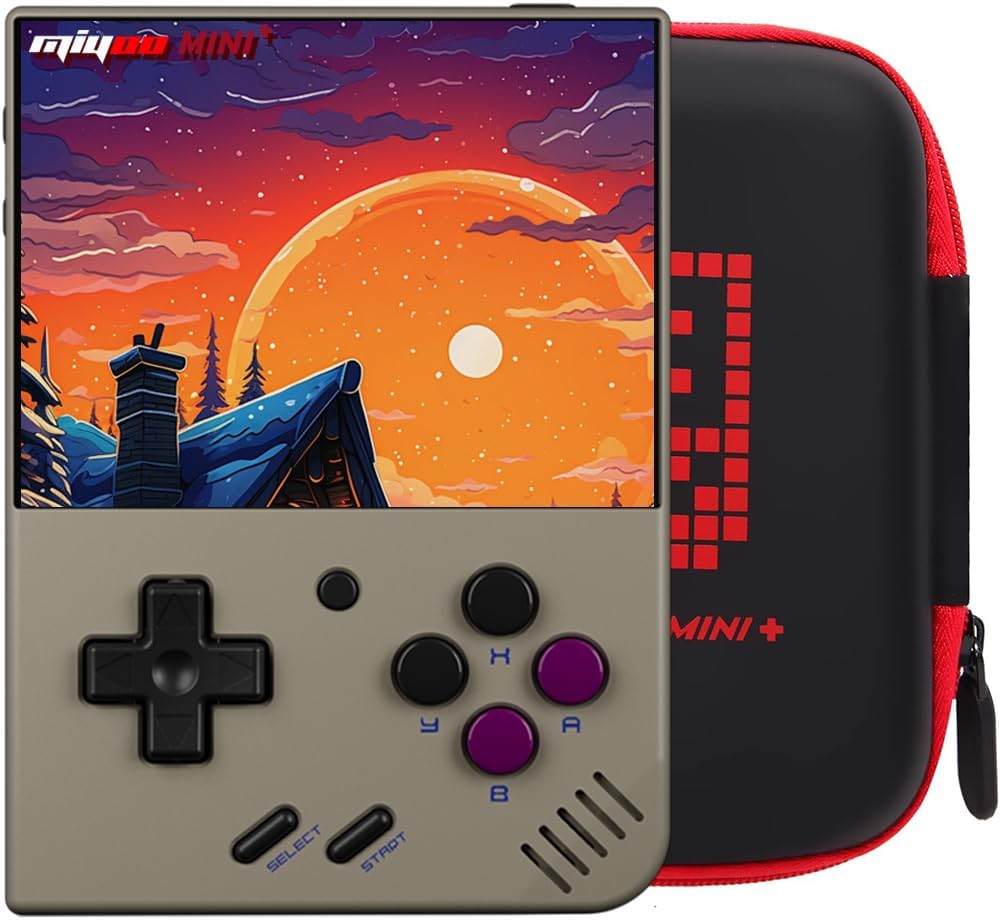
Gift for Men Women, Miyoo Mini Plus with Portable Case Retro Emulator Handheld Game Console with WiFi & RTC, Christmas Stocking Stuffers for Men, Mens Gifts for Dad,Husband, Gray
Emulation enthusiasts who want WiFi connectivity and solid battery life in a compact package.
The 3000 mAh battery paired with a Linux-optimized system delivers up to 6 hours of play with stable frame performance across dozens of emulators.
The 3.5 inch screen is smaller than several competitors in this set, which can feel cramped during extended sessions.
Mid-range
- WiFi and RTC built in
- 3000 mAh battery for extended play
- Stable Linux-optimized emulation
- Smaller 3.5 inch screen than others here
A dependable all-rounder with WiFi, long battery life, and broad emulator support for anyone stepping into retro handheld gaming.
Buy on AmazonS600 Retro Gaming Console, Handheld Game Console with Classic Games
Budget-conscious buyers who want a ready-to-play experience with a large game library right out of the box.
A preloaded 64 GB card containing over 22,000 classic games means no setup is required to start playing immediately.
The RK3326 Cortex-A35 chip at 1.5 GHz is the least powerful processor in this set, limiting compatibility with more demanding emulation targets.
Budget
- 22000 or more games preloaded out of the box
- Ergonomic anti-slip grip design
- No game hunting setup needed
- Least powerful CPU in this set
- Limited for demanding emulation targets
The most affordable entry point in the lineup with a massive preloaded library, best suited for casual retro gaming rather than demanding emulation.
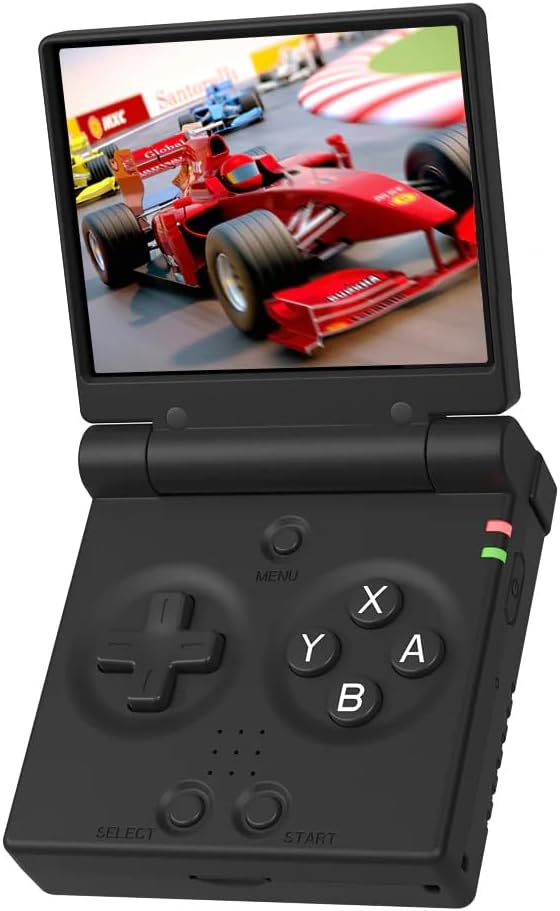
Buy on AmazonMiyoo Mini Flip Retro Handheld Game Console, 2.8 Inch 750*560 IPS Screen, Portable Linux Emulator Handheld, Gift for Men & Women, Black
Players who want a pocketable clamshell form factor inspired by the classic GBA SP design for on-the-go play.
The three-stage hinge clamshell design protects the 2.8 inch IPS screen and makes it genuinely pocket-friendly while still running 20 or more emulators.
The 2.8 inch screen is the smallest display in this set, which limits visual real estate compared to the larger options here.
Mid-range
- Clamshell hinge protects screen
- Quiet and comfortable button feel
- Runs 20 or more emulators
- Smallest screen in this set at 2.8 inches
The most pocketable pick in the lineup, ideal for everyday carry with a screen-protecting flip design and quiet buttons.
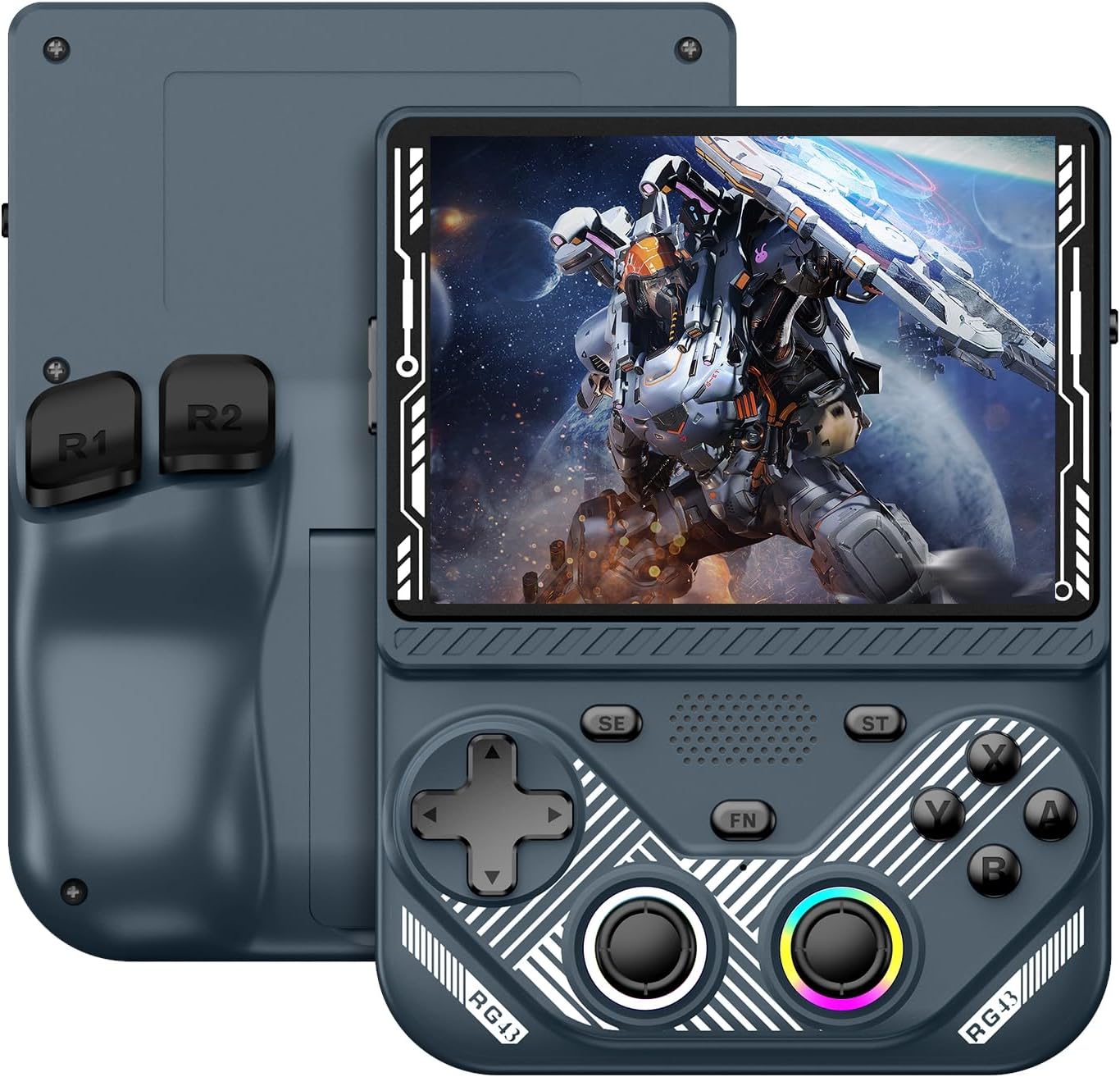
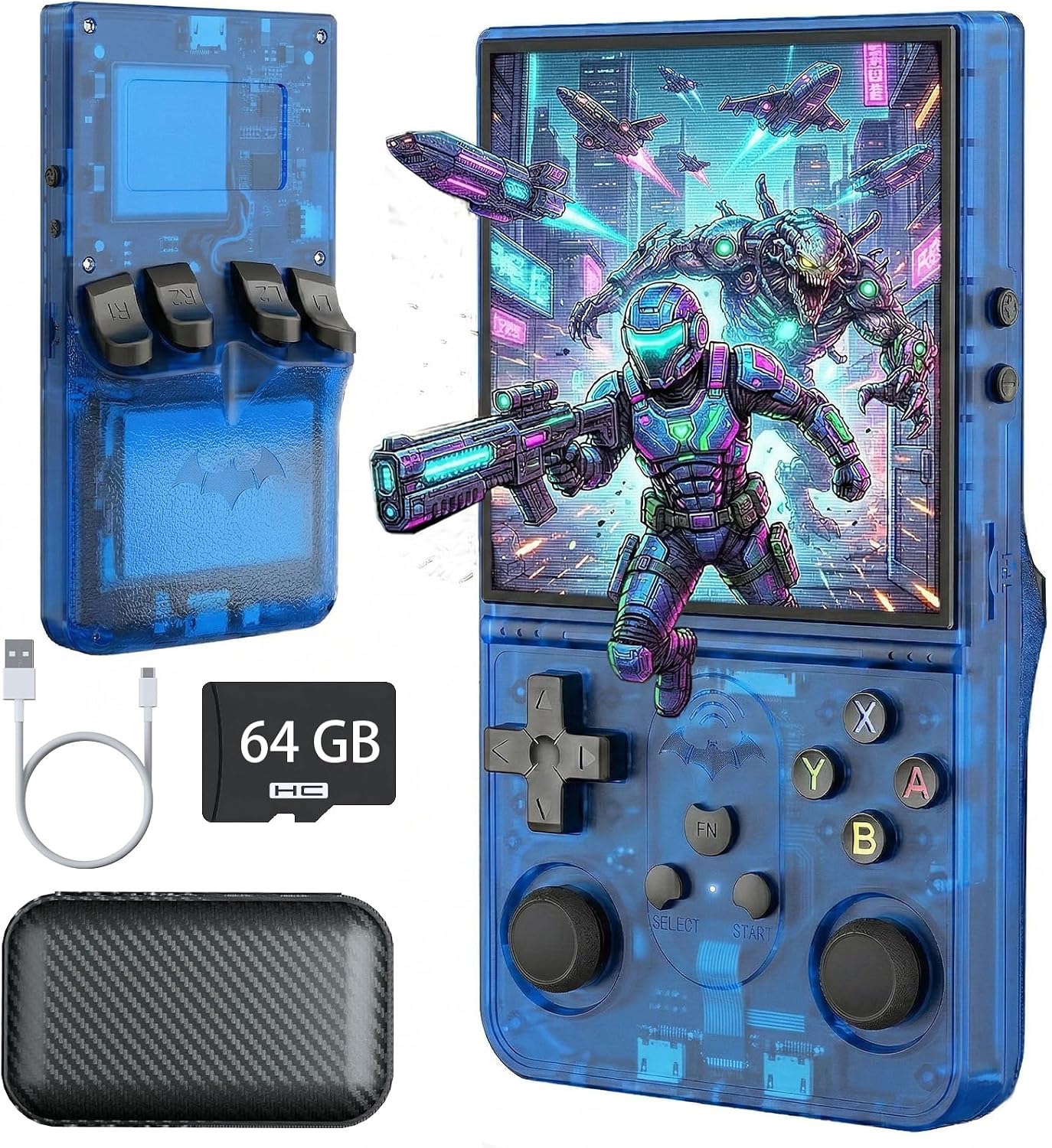
Buy on AmazonRG43V Pro Retro Handheld Game Console, 4.3 Inch IPS Screen, Portable Open Source Dual System with RK3562 CPU,with 64GB TF Card, Support WiFi Networked Fighting, HDMI TV Output(Glazed 64GB)
Power users who want a larger screen, HDMI TV output, and a capable processor for more demanding emulation.
The RK3562 quad-core Cortex-A53 at 2.0 GHz with 2 plus 4 GB RAM and a fully laminated 4.3 inch 1024x768 IPS display is the most capable hardware configuration in this set.
This is the priciest pick in this set, which puts it at a clear cost premium over the other options.
Premium
- Large 4.3 inch fully laminated IPS display
- HDMI TV output included
- Dual system support with powerful RK3562 chip
- Priciest pick in this set
The top-spec choice for buyers who prioritize a big sharp screen, strong CPU, and the ability to output gameplay to a TV.
Buy on AmazonWhether you’re chasing nostalgia or just want a fun way to game on the go, there’s a retro handheld out there that fits your style and budget. From pocket-friendly options to more feature-packed devices, the choices here cover a solid range of what’s available right now. Take your time browsing, and if something caught your eye, it’s worth clicking through to learn more before you decide. The world of retro handhelds keeps growing, so it’s a genuinely exciting time to jump in. Thanks for reading, and happy gaming!
Frequently asked questions
Which retro handheld works best for emulating older systems like Game Boy, SNES, and PS1?
All four handhelds here can handle Game Boy, GBA, SNES, and NES without breaking a sweat. PS1 emulation is where hardware starts to matter more: the Miyoo Mini Plus and Miyoo Mini Flip handle PS1 well on optimized firmware like OnionOS, while the RG43V Pro with its RK3562 CPU handles PS1 and light PS2 or N64 titles more comfortably thanks to its faster processor. If PS1 is your primary target, any of the Miyoo or Anbernic class devices will serve you well, but stepping up to the RG43V Pro gives you more headroom for demanding titles and future system support.
How hard is it to set up a retro handheld if you have never used emulation software before?
The Miyoo Mini Plus is widely considered one of the friendliest starting points because custom firmware like OnionOS installs from a microSD card and organizes everything through a clean menu. The Miyoo Mini Flip runs Linux out of the box so it is also fairly approachable without extra steps. The RG43V Pro ships with a 64GB card preloaded with content and supports a dual system setup, which gives beginners a working environment immediately. The S600 is the simplest option of all since it comes with built in classic games and needs no configuration, making it ideal if you want to press power and play without any setup.
What is the difference in portability between clamshell and standard form factor retro handhelds?
The Miyoo Mini Flip uses a clamshell design similar to a Game Boy Advance SP, which protects the screen when the device is closed and makes it genuinely pocket friendly without a separate case. The Miyoo Mini Plus has a more traditional open form factor, which is why it is sold with a portable case to protect the screen in a bag or pocket. Screen protection matters a lot for handheld longevity, so the clamshell has a practical edge for daily carry. If you prefer a larger display and do not mind carrying a case, the open form factor devices like the Miyoo Mini Plus or RG43V Pro typically offer bigger screens.
Does the RG43V Pro actually work connected to a TV, and what do you need to make that happen?
Yes, the RG43V Pro includes HDMI TV output, which is a feature the smaller Miyoo devices do not offer. You need a standard HDMI cable and a compatible display, and the 4.3 inch IPS screen at native resolution also holds up well for handheld play. This dual use case makes the RG43V Pro a practical pick if you want one device that works both as a pocket console and as a couch gaming unit connected to a larger screen. Keep in mind that TV output performance depends on the emulated system, and more demanding titles may perform better on the handheld screen than scaled up through HDMI.
Which of these retro handhelds offers the best value if you only want to play 8 and 16 bit era games?
For pure 8 and 16 bit play, the Miyoo Mini Plus delivers an excellent screen, WiFi for scraping game artwork and online features, and a comfortable form factor at a price point that sits below most competing devices with similar specs. The S600 is the most budget oriented option and suits buyers who want a no frills plug and play experience with classic games already loaded. The Miyoo Mini Flip adds the clamshell screen protection and a sharp IPS panel, which can justify its cost if portability and screen care are priorities for you. The RG43V Pro is more powerful than 8 and 16 bit games require, so it represents better value only if you plan to expand into PS1 era titles or want the HDMI output.